
Understanding Lemosho route acclimatization is your key to a safe and successful climb. This gentle, beautiful path is famous for giving your body the best chance to get used to the high altitude. So, for a first-time adventurer, this is your biggest advantage. We will walk you through exactly how your body adjusts day by day. You will learn why going slow is your superpower. Also, we will show how to plan for the most confident summit day possible.
Imagine climbing a very tall building. Now imagine climbing it all at once. You would be very tired and out of breath at the top. This is what a short trip up the mountain feels like for your body. The average success rate for climbing Kilimanjaro is about 65 to 67 percent. But on the longer routes, success rates climb much higher. For example, an 8-day Lemosho trek has a high success rate. Why? Because acclimatization is the reason. This is the process where your body slowly learns to work with less oxygen. However, it needs time. So, taking 7 or 8 days instead of 5 or 6 gives your body that precious time. It is the difference between struggling for air and walking with steady, calm breath. Those extra days are an investment in your safety, your comfort, and your victory.

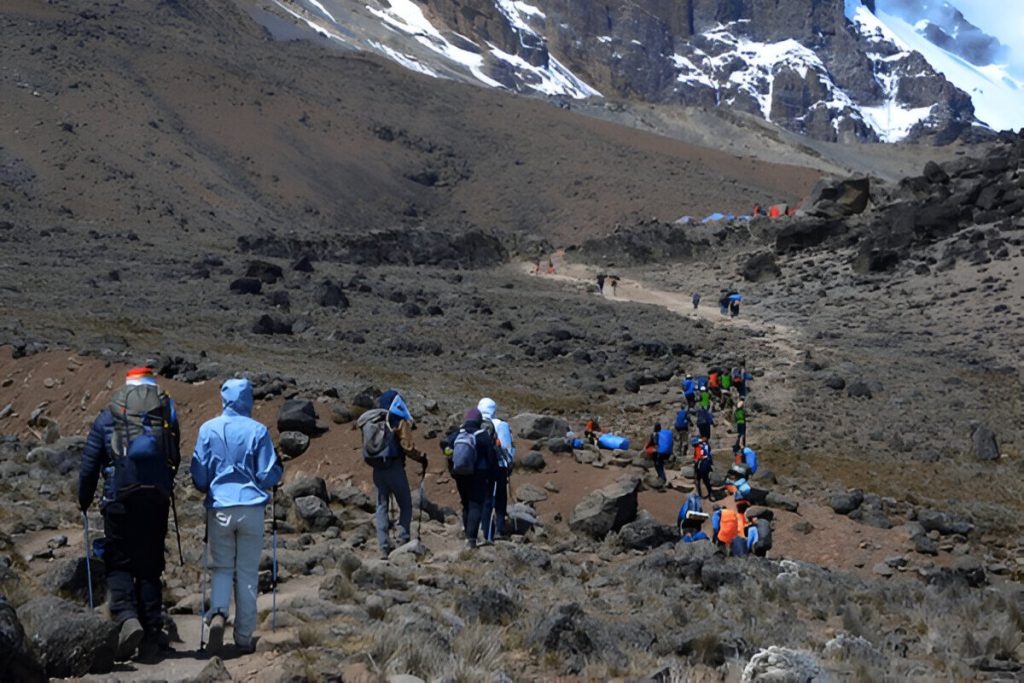
Let’s walk through a typical 8-day Lemosho route plan. You will see acclimatization in action. Day one starts in the green rainforest at Lemosho Gate. This is around 7,700 feet. It is a gentle walk, a warm-up. Then, day two takes you higher into the heather and moorland. You will feel the air getting cooler and thinner. The real magic starts on days three and four. This is where the “walk high, sleep low” strategy comes to life. For instance, you might hike up to a high point like 13,100 feet for lunch. You enjoy the views, then walk back down to sleep at a lower camp like 12,600 feet. This tells your body to make more red blood cells. But you avoid the stress of sleeping at the highest point. Each day follows this smart pattern. So, it builds your strength and adjustment slowly. It feels like training for a big event.
You will hear these two words many times: “Pole Pole” (pronounced po-lay po-lay). It means “slowly, slowly” in Swahili. This is not a suggestion. Instead, it is the golden rule. Walking slowly is the physical key to acclimatization. When you move slowly, your heart beats steadily. Your breathing stays deep and regular. Then, you give your body a constant, manageable supply of oxygen. However, rushing uses up oxygen quickly. This can lead to headaches, nausea, and exhaustion. These are signs your body is not happy with the altitude. Your guide will set a slow, steady pace. So, your job is to trust it. Even if you feel strong, conserve your energy. Think of it as a slow, mindful walk, not a race. After all, the mountain will not run away.

Why choose Lemosho over other paths like Machame or the Northern Circuit? It is about a gentle start, beautiful views, and less crowding. The Lemosho route begins on the western side of the mountain. The first two days are less steep than some other routes. This is kinder to your legs as you start to adjust. Also, it is known for having fewer people, especially at the start. This peaceful beginning reduces stress. Then, it lets you focus on your breathing and your body. Compared to the popular Machame route, Lemosho is considered a “gentle giant.” Machame is often called the “Whiskey” route and is steeper. The Northern Circuit is the longest and offers excellent acclimatization too. But Lemosho provides a perfect balance. It has great time, scenery, and high success potential for most adventurers.
Acclimatization is not automatic. You must be an active partner. Your body will send you signals every day. Some are normal. A mild headache or feeling a bit more tired can happen. Drinking lots of water and resting often helps. But you must know the serious signs. Watch for a headache that will not go away with medicine. Also, watch for severe nausea, dizziness, or confusion. Another sign is if you cannot catch your breath even while resting. These are important warnings. So, you must tell your guide immediately. Do not try to be “tough.” The best climbing teams are built on honest communication. Guides are trained to check on you daily. They have a plan for every situation. This includes helping you descend if needed for safety.
Drinking 3 to 4 liters of water each day is the most famous rule. But food is your fuel for acclimatization. At high altitude, your appetite can disappear. So, you must eat even if you do not feel hungry. Think of food as essential medicine. Your body is working hard. It burns many calories just to keep warm and move. Carbohydrates like pasta, rice, and potatoes are easy to digest. They provide quick energy. Also, snack often on nuts, dried fruit, and energy bars. Good trekking companies provide hearty, warm meals. These are designed to give you energy. Eating well keeps your strength up. Then, your body has the resources it needs. It can build new red blood cells and adjust to the thin air.
How do you train for something you cannot simulate at home? You build a strong engine. The best training for Kilimanjaro is not about speed. Instead, it is about endurance. You need the ability to keep going for hours. In the months before your climb, focus on long, slow walks or hikes. Use a small backpack. Aim for walks of 2 to 4 hours. Ideally, do this on hills or uneven trails. This builds the leg muscles you will use. Also, include cardio like cycling or using a stair climber. This strengthens your heart and lungs. Remember, you are training for 6-8 hours of daily walking. It is not a sprint. Being physically fit reduces the overall stress on your body. Then, it can focus its energy on the single task of acclimatizing.
Missing or wrong gear can make acclimatization harder. Staying warm and dry is absolutely critical. When you are cold or wet, your body wastes huge energy. It tries just to stay warm. That is energy it needs for acclimatization. So, your kit is your mobile shelter. Essential items include a very warm sleeping bag. It should be rated for below freezing. Also, you need layered clothing. This means a moisture-wicking base layer, a warm insulating layer, and a waterproof outer layer. Add a warm hat and gloves. Then, use sturdy, broken-in hiking boots. Walking poles are also highly recommended. They save your leg muscles up to 30% of the effort on downhill sections. This preserves your strength. Packing the right gear means you can focus entirely on your breathing. You can also enjoy the beautiful landscape, not discomfort.

Summit night is why you did all that slow, careful preparation. You will start walking around midnight. It is dark and very cold. This is the final test of your acclimatization. You will climb for 6-7 hours in the dark. You want to reach the crater rim at Stella Point by sunrise. The air is thinnest here. This is where your “pole pole” pace, your days of “walk high, sleep low,” and your hydration and nutrition all come together. You will take very small, slow steps. You will breathe deeply. You will trust the process. When you see the sunrise from the roof of Africa, you will understand the value of every slow day that came before it. Then, the descent is joyful and quick. It is a celebration of what your well-prepared body has achieved.
You do not climb Kilimanjaro alone. Your success depends on a team of experienced local guides and strong porters. This is a cultural and ethical partnership. A good guide is your acclimatization expert, your motivator, and your safety officer. They watch your pace, your breathing, and your energy every single day. The porters carry the camp, the food, and your main bag. This allows you to walk with only a small daypack. So, this is an immense gift. It lets you conserve all your energy for acclimatization. Choosing a company that treats this team fairly is important. They should provide proper wages, gear, and food. This is not just ethical. It also builds a happy, motivated, and professional team. Then, they focus entirely on your safe and successful journey.
“`