
Planning to climb Kilimanjaro via the Marangu Route is a great decision. You are in the right place for guidance. This path is often called the “Coca-Cola” route. It is known as the most accessible path to the roof of Africa. This guide will walk you through every step. We will talk about the gentle daily walks. You will learn about the cozy mountain huts you will sleep in. We will cover the simple but important things you need to know to succeed. Our goal is simple. We give you clear, calm, and practical information. This will help you prepare your gear, your mind, and your body. It is for a journey you will remember forever.

The Marangu Route feels different from other paths up Kilimanjaro. Its nickname is the “tourist route” or “Coca-Cola route.” This comes from its long history and forgiving nature. That is why it is so popular with first-time adventurers. There are two main reasons for this gentle reputation. First, the daily climbs are steady and not too steep. You gain altitude slowly, which helps your body adjust. This slow pace is your best friend on the mountain. Second, you sleep in simple mountain huts every night. So you do not need to carry a heavy tent. You also avoid sleeping on the cold ground. The huts have bunk beds and provide basic shelter. This comfort makes a big difference in your energy levels. For a new high-altitude trekker, these factors are key. Predictable paths and a solid roof make the Marangu Route a comforting and smart first choice.

Understanding the simple facts builds confidence. Let us look at the numbers. The total walking distance for the Marangu Route is about 70 kilometers, or 44 miles. But you do not walk this all at once. The climb is broken into gentle pieces. You start at Marangu Gate at 1,860 meters (6,100 feet). Each day, you walk to a new hut. Mandara Hut is at 2,700 meters (8,860 feet). Then Horombo Hut is at 3,720 meters (12,200 feet). Kibo Hut is your launch point for the summit at 4,700 meters (15,420 feet). Finally, you reach Uhuru Peak at 5,895 meters (19,341 feet). Seeing these numbers helps you understand the gradual climb. The most important number is the success rate. For the standard 5-day Marangu itinerary, success rates are often around 50-60%. This is because the body has less time to get used to the thin air. So we always recommend the 8-day option. It dramatically increases your chances.
This is your most important decision for the climb. You choose between a 5-day and an 8-day itinerary. The extra days are not about being slower. They are about a magic word: acclimatization. Acclimatization is your body’s process of getting used to less oxygen. It takes time. On the 5-day route, you go from the gate to the summit very fast. Your body often protests with headaches and nausea. This makes summit night extremely difficult. The 8-day itinerary adds vital acclimatization days. You spend two nights at Horombo Hut. On your extra day there, you take a gentle hike up to Mawenzi Ridge. You climb to a higher altitude, and then come back down to sleep at Horombo. This “climb high, sleep low” technique is the golden rule of mountain safety. It tells your body to prepare for the thin air ahead. Choosing the 8-day trek is the single biggest thing you can do. It helps ensure you stand on the summit, smiling and healthy.
Let us walk through the 8-day journey together. Imagine each day as a new chapter in your adventure book.
Day 1: You start at Marangu Gate, full of energy. You walk through a beautiful, dense rainforest for about 4-5 hours to reach Mandara Hut. You might see monkeys in the trees.
Day 2: You leave the forest behind and enter the open heathland. The views become wide and grand. This 5-6 hour walk takes you to Horombo Hut, where you will sleep for two nights.
Day 3: This is your acclimatization day. You take a light daypack and hike up towards the dramatic peaks of Mawenzi. You might reach 4,500 meters before returning to Horombo to sleep. This day is crucial for your success.
Day 4: You trek across the lunar-like alpine desert to Kibo Hut. The landscape is stark and beautiful. You go to bed early because summit night starts just after midnight.
Day 5: Summit Day! You wake at night, put on all your warm clothes, and begin the slow, steady climb under the stars. You reach Gilman’s Point at sunrise and then walk along the crater rim to Uhuru Peak. After celebrating, you descend all the way back to Horombo Hut, tired but triumphant.
Day 6: A final, joyful descent takes you from Horombo all the way back through the forest to Marangu Gate. There you receive your summit certificate.
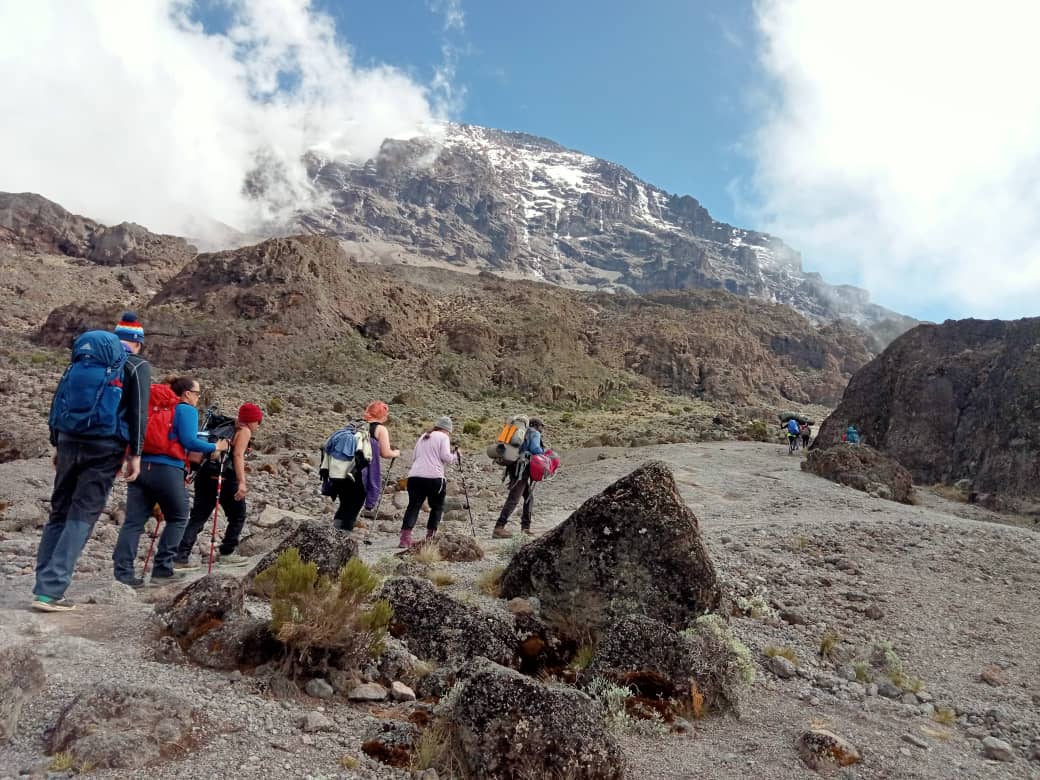
Safety on Kilimanjaro is not about being the strongest. It is about being the smartest. The biggest risk is Acute Mountain Sickness (AMS). This happens when your body struggles with the high altitude. Symptoms can be a headache, loss of appetite, dizziness, or feeling very tired. Your guides are trained experts in spotting these signs. You must listen to them. Their rule is “pole pole” (pronounced po-lay po-lay). It means “slowly, slowly” in Swahili. This is your marching song. Walk slower than you think you need to. Drink more water than you think you should. Aim for 4-5 liters every day. Eat regularly, even if you are not hungry. Your body needs the fuel. Most importantly, be honest with your guide about how you feel. Turning around is not failure. It is wisdom. A good guide team will have a safety plan. They carry an oxygen cylinder and a portable stretcher for emergencies. Your job is to communicate, go slow, and drink water.
Packing the right things makes your climb comfortable and safe. You do not need the most expensive gear. But you need the right gear. Think in layers. The temperature changes from warm at the gate to freezing on the summit. Your kit should include a warm sleeping bag rated for -10°C. You also need a comfortable daypack for your water and snacks. Also pack a large duffel bag that a porter will carry for you. For clothing, pack a moisture-wicking base layer. Bring a warm fleece or insulated jacket and a waterproof outer shell. Also pack thermal leggings and trekking pants. Do not forget a warm hat, gloves, and thick socks. Good, broken-in hiking boots are your most important item. For summit night, you will need a headlamp with extra batteries. Also pack sunglasses and sunscreen. Trekking poles save your knees. Bring a reusable water bottle or hydration bladder. A small personal first-aid kit with plasters and any personal medicines is also wise.
Your success depends on the team that supports you. A typical group will have a lead guide, an assistant guide, a cook, and a team of porters. These are the true heroes of Kilimanjaro. They make your journey possible. The guides set the safe pace. They monitor your health and share stories about the mountain. The cook prepares warm, nourishing meals that give you energy. The porters carry the heavy supplies and your duffel bag from camp to camp. It is important to choose an operator that treats this team well. They should pay fair wages and provide proper equipment. You can show your respect by learning a few Swahili greetings. Say thank you (“asante sana”) and tip the team fairly at the end. Their hard work and encouragement are a huge part of your summit story.

A smooth start sets a positive tone for your adventure. Most climbers begin their journey in Arusha, the safari capital of Tanzania. A good tour operator will handle all the logistics from here. This includes your transfer from your hotel in Arusha to the Marangu Gate. It is about a 2 to 3 hour drive. At the gate, you will meet your guide team. You will register with the park authorities. Your porters will carefully weigh all the bags to ensure loads are fair. This organized start means you can relax and focus on the hike ahead. After your climb, the transfer back to Arusha is included. Handling these details professionally means no stress for you. It allows you to conserve all your mental energy for the beautiful challenge of the mountain itself.
You do not need to be an Olympic athlete. But you do need to be prepared. The best training for Kilimanjaro is walking. Specifically, you should practice walking uphill for long periods. If you have hills or stairs near your home, use them. Start training at least 2-3 months before your climb. Begin with shorter walks and slowly build up to longer ones. Carry a daypack with weight in it. Aim to be comfortable walking for 5-7 hours on consecutive days. Building leg strength and cardiovascular endurance is key. Also, go for walks in the gear you plan to use. This is especially important for your hiking boots. This “breaks them in” and prevents painful blisters on the mountain. Consistency is more important than intensity. A gentle, regular training routine will build the stamina you need. Then you can enjoy every day of your trek.
So, is the Marangu Route your path? It is the right choice if you are a first-time high-altitude trekker. You might value a bit more comfort. The huts offer shelter and a social atmosphere. The well-defined trail and steady gradient make it mentally easier to follow. It is perfect if you like the idea of a more structured trek with established camps. However, it might be less ideal if you seek complete wilderness solitude. It is the busiest route. Remember, while it is called the “easiest” route, climbing Kilimanjaro is never easy. The altitude challenge is real on every path. By choosing the 8-day Marangu itinerary, you set yourself up for success. Prepare your body with training and pack the right gear. Then you will have the best chance for a safe, successful, and deeply rewarding journey to the top of Africa.
Yes, it is considered the least difficult in terms of terrain. The paths are well-established and the daily climbs are steady. However, “easiest” does not mean easy. The challenge of high altitude affects everyone, regardless of the route.
The extra days are for acclimatization. They give your body time to slowly adjust to the thin air. The 5-day schedule moves too fast for most people. This leads to a higher chance of getting sick from the altitude and having to turn back.
Distances vary. The first day is about 8 km (5 miles) to Mandara Hut. The second day is about 12 km (7.5 miles) to Horombo. Summit day involves climbing about 6 km (3.7 miles) up. Then you descend 21 km (13 miles) back to Horombo. Guides focus more on time walked. It is 4-7 hours most days, and 12-14 hours on summit day.
No. A key feature of the Marangu Route is the system of mountain huts. You will sleep in a shared bunk room in simple huts at Mandara, Horombo, and Kibo. You only need your sleeping bag.
It can be very cold. Temperatures are often between -10°C to -20°C (14°F to -4°F) with wind. This is why layers are so important. You will start the summit climb at night when temperatures are at their lowest.
Your guides are trained to recognize altitude sickness. The first treatment is always to descend to a lower altitude. They will monitor you closely. If necessary, they will escort you down. For serious cases, they have emergency oxygen and can arrange a rapid evacuation.
Tipping is a customary way to thank the team. Guidelines are usually provided by your tour operator. As a general rule, the total tip pool is shared among the team. It is based on the group size and number of days. Prepare this amount in clean, smaller US dollar bills or Tanzanian shillings.
There is no reliable electricity in the mountain huts. You must bring enough power banks to last the entire trek. Solar-powered chargers can also be useful, but sunlight is not guaranteed.
The cook prepares hearty, high-energy meals. Expect breakfasts like porridge, eggs, and toast. Lunches are often packed picnic-style. Dinners are warm and can include soup, rice, pasta, vegetables, and meat or fish. They will cater to dietary needs if you tell your operator in advance.
With a reputable operator, the risks are managed and minimized. A good acclimatization schedule like the 8-day route is key. Also, listen to your body and guides. The biggest danger is altitude sickness. It is mitigated by going slowly and having a professional team with you.
“`