
You’re planning a 7 Days Serengeti Migration Safari Price comparison, and the quotes you see swing wildly from a few thousand dollars to over seven thousand. This is the first gap brochures don’t bridge: a $1,000 safari and a $7,800 safari are different worlds.
As a local team running these trips, we’ll give you the honest map. This guide isn’t about the lowest price; it’s about the real value. We’ll break down what you’re actually paying for, what a day truly feels like, and how to match your budget to the experience you dream of, without the marketing fluff.
The price isn’t random. It’s a direct reflection of four key pillars: timing, location, comfort, and ethical operation. A lower price often cuts corners in one or more of these areas.
The single biggest cost is park fees, which are fixed by the government and non-negotiable. A quality operator pays these fees—always ask for a breakdown to confirm. Next is accommodation: a tented camp inside the park with its own generator costs far more than a lodge outside the gates, which adds hours of daily commuting.
Finally, consider the vehicle and guide. A pop-top Land Cruiser for six guests offers a far better view than a minivan packed with eight. A seasoned guide who can spot a leopard in a tree from a kilometer away is priceless, but their expertise comes at a fair wage.
Research shows a dizzying range. You can find a basic 7-day Western Serengeti safari from around $1,000 per person. At the other extreme, dedicated Great Migration packages can exceed $7,800. This isn’t a scam; it’s a spectrum of experience.
The $1,000-$2,500 range typically uses lodges outside parks, shared minivans, and covers the basics. The $2,500-$5,000 mid-range is where most quality safaris sit, featuring private vehicles, better-located lodges or tented camps, and expert guides.
The $5,800+ tier is true luxury: exclusive mobile camps that move with the migration, private guiding, and sometimes even charter flights between parks. Your 7 Days Serengeti safari cost is an investment in time, comfort, and wildlife access.
Transparency here is non-negotiable. Every credible operator will list inclusions. If they don’t, it’s a red flag. The standard should cover all park entry fees, conservation levies, and vehicle fees—these are your legal ticket into the wilderness.
Full-board accommodation (all meals) and drinking water are a must. All game drives in a 4×4 vehicle with a professional, English-speaking guide should be included. Finally, all transfers from and to the airport (usually Kilimanjaro or Arusha) close the loop.
Common exclusions are international flights, Tanzanian visa fees (about $50 for US citizens), travel insurance, tips for your crew, and alcoholic drinks. Knowing this upfront prevents a nasty surprise on your final bill.
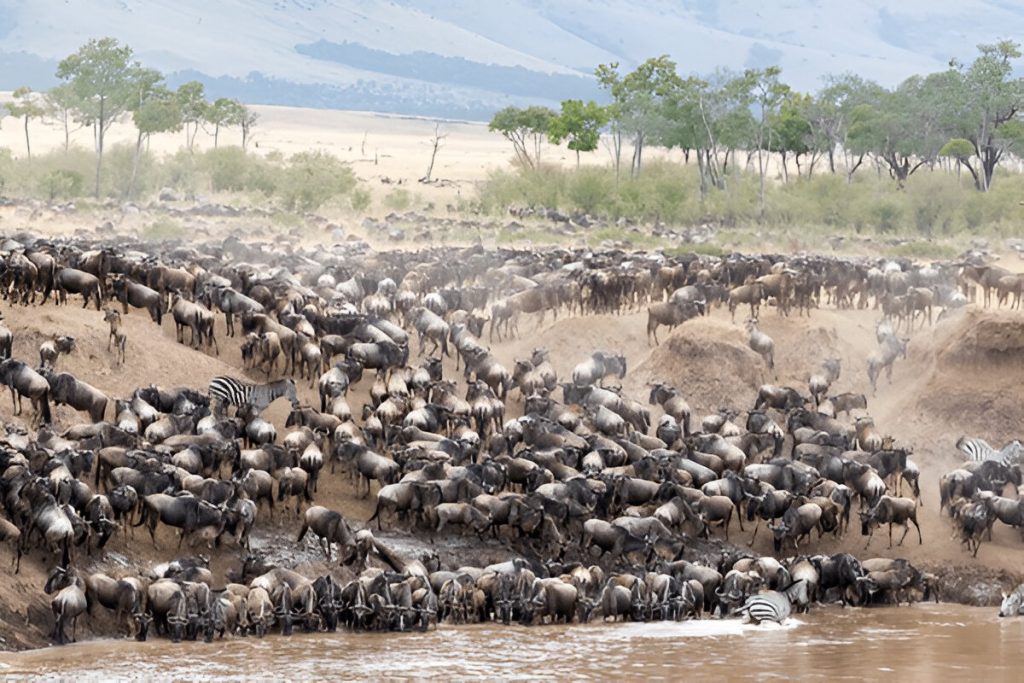
This is the gap most sites gloss over. They sell “Great Migration safaris” but don’t tell you the herds are in a different part of the Serengeti every month. Booking in the wrong season for the wrong region means you’ll see grass, not wildebeest. If you’re considering a July to October adventure, be prepared for the 7 Days migration safari price peak season.
From December to March, the herds are in the Southern Serengeti and Ndutu area, calving season. April to June, they move through the central Seronera region, with potential river crossings in the Western Corridor (Grumeti) around May-June.
The iconic Mara River crossings in the Northern Serengeti happen from late July through October. By November, the herds are moving back south. A true migration-focused itinerary will plan your camps around this calendar, not offer a static route.
The fun of safari planning stops when you realize you don’t know which airport to fly into, when to get a visa, or how to handle cash. Let’s ground the dream in practical steps.
All safaris start from Arusha. You’ll fly into either Kilimanjaro International Airport (JRO) or Arusha Airport (ARK). Most operators include a meet-and-greet and transfer to your first hotel. A tourist visa is required; for US citizens, it’s $100 and can be obtained on arrival, but applying online in advance saves time.
You’ll need some US dollars in cash for souvenirs, tips, and any drinks not included. Notify your bank of travel, and ensure you have a yellow fever vaccination certificate if traveling from a listed country.
Tell us what you have in mind and we’ll build you a free, no-pressure itinerary with honest pricing — planned by a local team that runs these trips every day.
This is a critical gap in most marketing. A lower price can sometimes mean cut-rate wages for guides, unsafe vehicles, or bypassing park fees—which hurts conservation. An ethical operator’s cost reflects fair treatment of its team.
Ask if guides are salaried with benefits, not just freelance. Check if the company has a clear sustainability policy, like reducing plastic waste in camps. Do they contribute to local community projects? This isn’t just feel-good; it ensures your money supports the ecosystem you came to see.
A reputable company will also be transparent about its safety protocols, including vehicle maintenance standards and guide first-aid training. This peace of mind is part of the value you’re paying for.
Many wonder if a 7-day safari is too long. It’s not. The rhythm is magical but not lazy. Your day starts before sunrise with a quick coffee and a snack before the morning game drive—the best time to see predators active.
You return to camp for a late, hearty brunch, then have time to rest, read, or watch wildlife at the waterhole. The afternoon drive heads out around 3:30 or 4 PM, searching for different animals and ending with a sundowner as the sky explodes with color.
Dinner is under the stars, sharing stories. Each day focuses on a different area or behavior. By day seven, you’re not tired of it; you’re in tune with the land’s pulse in a way a shorter trip can’t allow.
The vehicle is your mobile home and viewing platform. The standard is the classic 4×4 Toyota Land Cruiser with a pop-top roof. This allows everyone to stand for a 360-degree, unobstructed view.
Shared vehicle safaris are cheaper but mean you share space with up to six others; you compromise on viewing time if others want to leave early. A private vehicle, while more expensive, gives your group complete flexibility on timing and itinerary.
Some budget operators use minivans, which are less comfortable on rough roads and have smaller windows. For the core Serengeti experience, insist on a proper 4×4 safari vehicle.
Packing wrong can affect your comfort more than you think. The key is layers. Mornings on the Serengeti can be surprisingly chilly, especially in an open vehicle, but midday is warm.
Neutral-colored clothing (khaki, green, beige) is best for blending in. A warm fleece or jacket, a sun hat, high-SPF sunscreen, and quality sunglasses are mandatory. Don’t forget binoculars—they bring the drama of the wilderness into sharp detail.
A good camera with a zoom lens is essential. Pack a power bank for charging in the vehicle, as camps may only have electricity at certain times. Finally, bring a sense of adventure and patience—nature works on its own schedule.
Now, how do you turn this knowledge into a booking? First, decide your priority: Is it budget, luxury, or specifically tracking the migration? This narrows your search immediately. During peak season, expect a higher 7 Days migration safari price peak season compared to other times of the year.
Contact a few operators with clear dates and group size. Ask for a detailed, line-item quote. Compare not just the total, but the accommodation names, vehicle type, and guide qualifications. Read recent, independent reviews.
Finally, trust your gut. The right operator will answer questions patiently and transparently, without pressure. They understand this is a significant investment and will work to earn your trust, not just your payment.
Yes, absolutely. Seven days allows you to explore two or three national parks in depth, such as the Serengeti and Ngorongoro Crater, without feeling rushed. It provides a complete and immersive experience.
It depends on what you want to see. For calving season, aim for late January to March in the south. For the dramatic river crossings, target the Northern Serengeti from late July through October.
A reputable operator will always include all mandatory park entry fees, conservation levies, and vehicle fees in their quoted price. Always ask for a breakdown to confirm this.
A general guideline is $25-$30 per day for your guide and $15-$20 per day for your camp staff, to be shared amongst the team. This is a gesture of appreciation for good service.
This varies by price tier. Budget safaris use standard lodges. Mid-range features comfortable tented camps or lodges inside the parks. Luxury offers exclusive mobile camps or high-end lodges with premium amenities.
Yes. Tanzania is a malaria-risk area. Consult your doctor or a travel clinic well in advance (4-6 weeks before travel) for the most appropriate anti-malarial prophylaxis for you.
Reputable operators have protocols for medical issues. Guides are trained in first aid, and camps often have links to flying doctor services for serious emergencies. Comprehensive travel insurance is non-negotiable.
Most safari vehicles have charging ports. Camps and lodges have electricity, but it may only be available during certain hours (e.g., in the evening). Bringing a power bank is a very wise backup.
Bottled water is plentiful and should be provided by your operator. Use bottled water for drinking and brushing your teeth. Tap water in lodges and camps is generally not safe for consumption.
A shared safari means you join a group in one vehicle, which lowers the cost. A private safari is just for your party, offering complete flexibility on game drive times and itinerary, but at a higher price.
“`