
You’ve seen that the Northern Circuit is called the “ultimate” Kilimanjaro route — the longest and with the highest success rate. But for a Northern Circuit Budget Trek, you’re likely asking: is spending those extra days and money really worth it? As a local team that runs these trips, we’ll give you the honest, ground-level view the brochures gloss over.
This guide isn’t about selling you the most expensive trek. It’s about helping you decide if the Northern Circuit’s specific advantages match what you value most: safety, summit chances, and real value for your hard-earned budget.
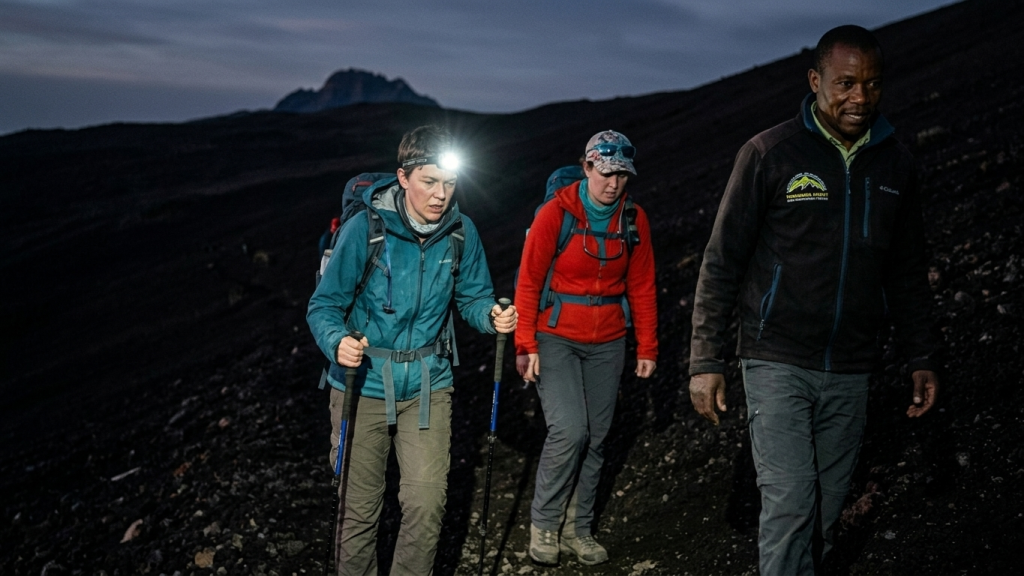
Think of the Northern Circuit not just as a path up the mountain, but as a strategic journey designed for one thing: acclimatization. At 8-9 days, it’s the longest standard route on Kilimanjaro.
Its key feature is a long traverse across the remote northern slopes after you leave the Lemosho route. This is the “extra days” you’re paying for. You spend more time at moderate altitude, hiking high but sleeping low, which is the golden rule for adapting your body.
This northern section is notably less crowded. You trade the bustling trail junctions of the southern routes for quiet, arid moorlands with stunning views into Kenya. The solitude itself becomes a feature, allowing for a more immersive experience.
For a budget trekker, this means your investment in extra days buys you two concrete things: a significantly higher chance of reaching the summit, and a more peaceful wilderness experience than the popular southern routes can offer.
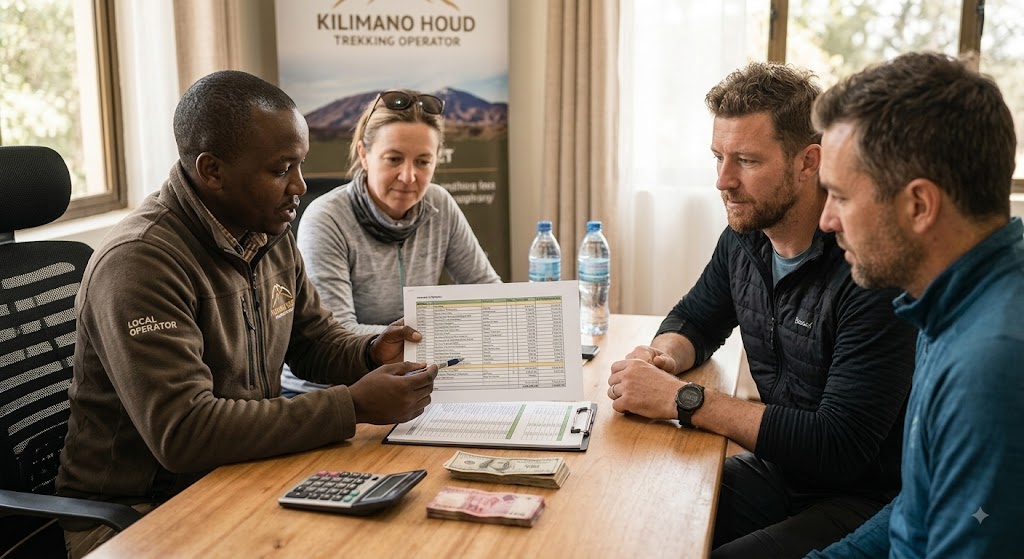
When you see “budget trek,” your first question is about the real cost. Let’s be direct. A true budget price for an 8-day Northern Circuit trek starts around $2,600 to $2,900 per person for a group join-in.
This should cover park fees, transfers, food, tents, and a professional crew. Prices below this range often cut critical corners — in guide experience, food quality, gear maintenance, or porter welfare. These are costs you don’t see until you’re on the mountain.
The advertised trek price rarely includes everything. You must budget extra for tipping the crew ($250-$350), travel insurance, rental gear (sleeping bag, trekking poles), and any hotel nights before or after. A realistic total trip cost is often the trek price plus 15-20%.
For the Northern Circuit, the “budget” is in choosing a value-driven operator for a longer route, not finding a dangerously cheap shortcut. The extra days require more food, fuel, and porter wages, so the cost is logically higher than a 6-day trek.
The research highlights summit success as a key selling point, and it’s real. Operators quote success rates of 90-95% for the Northern Circuit, compared to 80-85% for Machame or 70-75% for Marangu.
This isn’t magic; it’s physiology. The longer itinerary provides an unmatched acclimatization profile. Your body simply has more time to adjust to the thinning air before the brutal final push to Uhuru Peak.
A high statistical success rate does not guarantee your success. You must still train. But what it does mean is that if you are reasonably fit and commit to the longer trek, the route itself stacks the odds powerfully in your favor. For many, this assurance is worth the investment.
The Northern Circuit is ideal if your priority is maximizing your summit chance above all else. It’s for the traveler who views the trek as a project to be completed successfully, not just an experience to be had.
It’s also perfect for those who dislike crowds. If the idea of sharing camps with dozens of other groups every night diminishes your sense of adventure, the northern traverse provides a solitude you won’t find on Machame or Lemosho.
If you are extremely time-constrained or have already proven your ability to acclimatize well at high altitude, a shorter route like Lemosho or Machame might suffice. Similarly, if your budget is rigid and cannot stretch to cover the extra days, another excellent route is a better, safer choice than an underfunded Northern Circuit attempt.
An 8-day itinerary typically starts on the Lemosho route for the first two days, entering through the lush rainforest. You then gradually ascend across the Shira Plateau before the critical turn north.
Days 4 through 6 are the core of the Northern Circuit. You’ll hike across the remote northern slopes, with long, scenic hikes that gain manageable altitude each day. A common day involves a 4-6 hour morning hike, a hot lunch at camp, and an optional afternoon acclimatization walk.
Tell us what you have in mind and we’ll build you a free, no-pressure itinerary with honest pricing — planned by a local team that runs these trips every day.
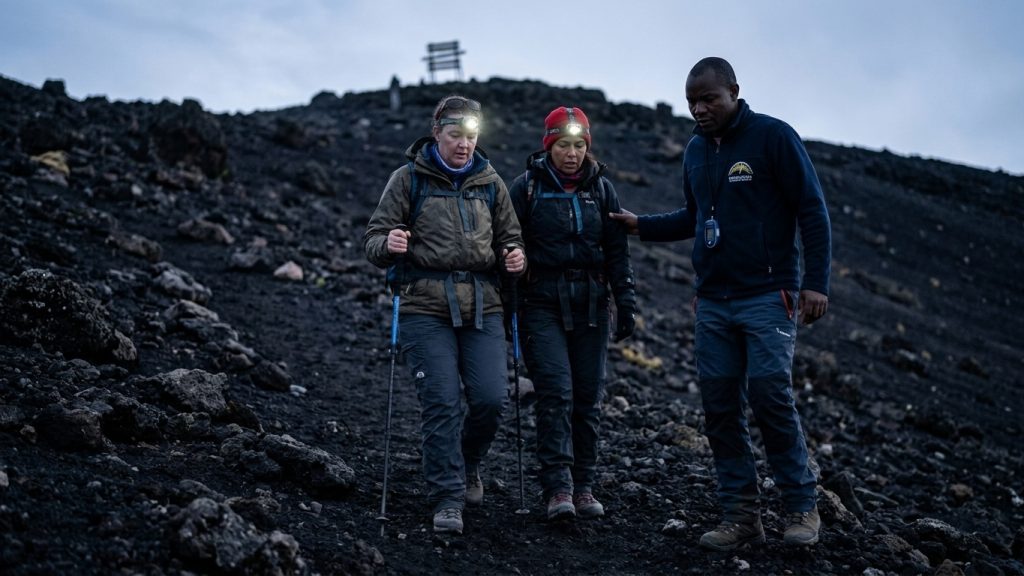
This is a major gap in most online content. A true “budget” should never come at the cost of the crew’s welfare. The porters and guides are the backbone of your success.
An ethical operator pays fair wages, provides adequate food and shelter for the crew, and adheres to the KPAP (Kilimanjaro Porters Assistance Project) guidelines. This includes weight limits for porter loads. Ask your operator directly about their KPAP participation and porter treatment policies.
Choosing a company that cuts costs by overloading or underfeeding porters is not a saving; it’s supporting exploitation. The few extra dollars per day that go toward ethical practices are a non-negotiable part of a responsible trek. This is a critical factor often hidden behind a low price tag.
Because the Northern Circuit spends time on colder, windier northern slopes, being prepared for variable conditions is key. Your operator should provide tents and mess equipment, but personal gear is your responsibility.
Must-haves include a high-quality sleeping bag rated to at least -10°C (14°F), a warm insulated jacket, moisture-wicking base layers, and sturdy broken-in boots. Many budget trekkers need to rent key items like the sleeping bag and trekking poles, which costs $50-$100 extra. If you are preparing for a Budget Northern Circuit experience, plan to rent items in advance to avoid last-minute surprises.
High-factor sunscreen, lip balm, a wide-brimmed hat, and quality sunglasses are vital on the exposed northern trails. A detailed packing list from your operator is essential; use it, and don’t assume you can buy forgotten items at the gate.
How does the Northern Circuit stack up against other popular routes? The Machame Route (6-7 days) is often called the “Whiskey Route.” It’s steeper, more scenic, but also more crowded. Its success rate is good, but lower than the Northern Circuit due to less acclimatization time.
The Lemosho Route (7-8 days) is similar to the start of the Northern Circuit and is also excellent. It’s more scenic initially but joins the busier Machame route on day 4. The Northern Circuit splits off here, offering more days and solitude.
For a first-time climber, the difference between a 7-day Lemosho and a 9-day Northern Circuit can be the difference between a tough summit night and a manageable one. If your budget allows, the extra investment in time directly buys confidence and comfort. This detail often influences trekkers leaning toward Budget Northern Circuit options.
Your operator choice is your single most important safety and success factor. Look for companies with documented high success rates, detailed safety protocols (like carrying oxygen and pulse oximeters), and verifiable ethical standards.
Read recent, detailed reviews on independent platforms. Ask specific questions: What is your guide-to-client ratio? What is your emergency evacuation procedure? Are you KPAP certified? A reputable company will answer these promptly and transparently.
So, is the Northern Circuit Budget Trek worth the extra days? If your primary goal is to stand on the roof of Africa, then yes, unequivocally. The route is engineered for success, and the peace of the northern slopes is a genuine bonus. For trekkers seeking a Budget Northern Circuit, this balance of value and experience is hard to beat.
The “budget” aspect is about finding honest value, not the rock-bottom price. You are investing in more days on the mountain, which means more food, wages, and park fees. Paying for this properly, with a responsible operator, is the wisest budget decision you can make.
It’s not the cheapest trek. But for those who want to give themselves the best possible shot, while experiencing Kilimanjaro’s quiet side, it represents the best overall value on the mountain.
Nights, especially at high camps like School Hut, can drop well below freezing. Daytime temperatures are variable, but you must be prepared for sub-zero conditions at altitude.
It’s not technically harder, but it is longer. The daily hikes are generally less steep than Machame, but the cumulative physical and mental challenge of spending more days on the mountain is significant.
The standard tipping guideline is $20-$25 per day for the guide, $15-$20 for the assistant guide, and $10-$15 per day for each porter. For an 8-day trek, this totals $250-$350 per climber, paid as a group tip at the end.
No. Kilimanjaro National Park requires all climbers to be accompanied by a licensed guide. You can book a “private solo” trek, but you will still have a full support crew.
The dry seasons—January to mid-March and June to October—offer the clearest skies and driest trails. These are the most popular and reliable times to climb.
Absolutely. It is mandatory with any reputable operator. Your policy must cover emergency high-altitude medical evacuation up to 6,000 meters.
Aim for 3-4 liters minimum. Proper hydration is one of the simplest and most effective ways to aid acclimatization and prevent altitude sickness.
Your guides are trained in wilderness first aid and altitude illness recognition. They carry first-aid kits and will monitor your health. In serious cases, they will initiate a descent, which is the primary treatment.
Public campsite toilets are basic and can be unpleasant. A quality operator will provide private portable toilet tents for your group, a major comfort worth confirming when you book.
All-inclusive packages provide transfer from your Moshi or Arusha hotel to the Londorossi Gate (for Lemosho start) and back after the trek. This is a 2-3 hour drive.