
You’re picturing it: endless plains, thundering hooves, and a landscape alive with the Great Migration. A 4 Days Serengeti Migration Safari is the classic way to witness this phenomenon. But between the stunning photos online, you have real questions. What does each day actually look like? How much will it truly cost? Which month is right?
Let’s build your plan together. This guide walks you through a realistic, day-by-day itinerary, grounded in what happens on the ground. We’ll cover costs, seasons, and the practical details brochures skip, so you can plan with confidence.
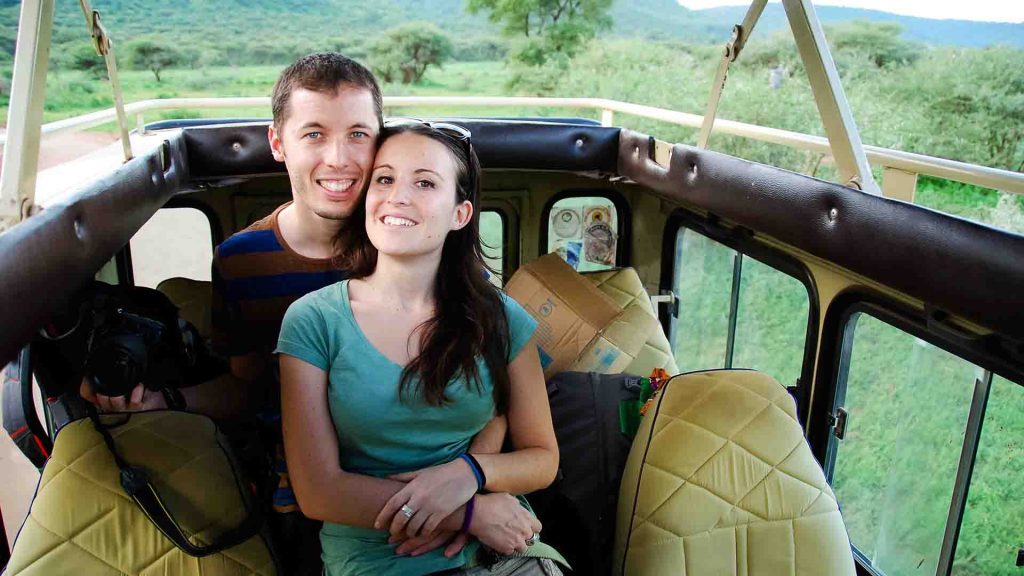
The first gap you’ll find online is vague pricing. You see a wide range, from a few thousand dollars to over eight thousand per person, and wonder what you’re really paying for.
Let’s be specific. For a 4-day migration-focused safari, total per-person costs typically range from $1,800 to $8,500. This range is almost entirely defined by your accommodation style. Budget camping safaris start around $450-$550 per day. Mid-range lodge or tented camp safaris run $600-$1,200 per day. Luxury safaris can reach $2,200 per day.
A reputable operator’s quote should include all park fees, all meals, bottled water, guide services, and 4×4 vehicle transport. The main variable is lodging. Always confirm what’s included; a surprisingly low price often excludes the steep park fees, which can be over $100 per person, per day.
Timing is everything with the migration, but predicting exact river crossing dates for a future year, like 2026, is impossible. The herds follow rain and fresh grass, not a calendar.
We work with broad, reliable windows. For the dramatic Mara River crossings in the northern Serengeti, plan for July through October. The calving season in the southern Serengeti and Ndutu area occurs from late January through March. These are your two primary targets for a 4-day trip, and match the hallmark periods of a 4 Days Serengeti river crossing safari and a 4 Days Ndutu calving safari.
This is a key gap in most guides. In July, for instance, rain in the southern Serengeti can keep herds lingering, while the north is drying out. Your guide’s daily communication with other drivers and rangers is crucial to positioning you where the action is, which is why an experienced local team matters.
Will you join a group or go private? This choice significantly affects cost, flexibility, and your overall experience. A group safari shares the vehicle with other travelers, lowering your per-person cost. A private safari means the vehicle, guide, and itinerary are exclusively yours.
For migration viewing, a private safari offers a major advantage: agility. If word comes of a river crossing happening 90 minutes away, your group can decide instantly to go. In a shared vehicle, you must reach a consensus, and you might miss the moment.
Most online itineraries are vague. Here is a concrete, day-by-day plan for a migration safari targeting the northern Serengeti (July-October). This is the real schedule we run for our guests—an ideal option for anyone seeking a 4 Days Serengeti river crossing safari experience.
You’ll be picked up from Arusha or Kilimanjaro Airport. The drive to the Serengeti is long (6-8 hours) but part of the adventure, with a stop at the scenic rim of Ngorongoro Crater. You’ll enter the Serengeti via the Naabi Hill gate, begin your first game drive en route to your camp in the central Seronera area, and settle in as the sun sets over the plains.
A full day of exploration. After an early breakfast, you head north from the central zone towards the Mara River region. Your guide will be listening for sightings on the radio. You’ll spend the day searching for the massive herds, with a picnic lunch in the bush. Overnight again in the central Serengeti or, if the migration is strong north, closer to the Mara River.
Tell us what you have in mind and we’ll build you a free, no-pressure itinerary with honest pricing — planned by a local team that runs these trips every day.
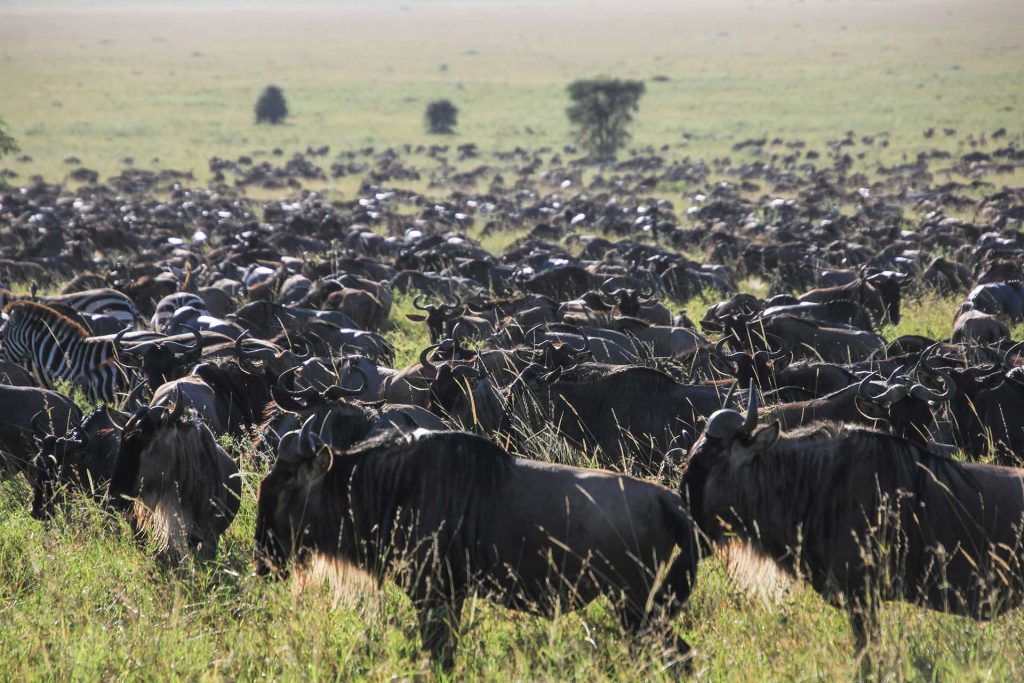
This is the pinnacle day dedicated to the migration. You’ll wake before dawn and drive directly to the prime crossing points along the Mara River. Patience is key; you may wait hours for the herds to gather courage. Witnessing thousands of wildebeest and zebra charge across the crocodile-infested river is a moment you’ll never forget. You’ll have a packed lunch at the sighting. This is where the 4 Days Serengeti Migration Safari truly shines, and why many choose a 4 Days Serengeti river crossing safari for maximum crossing opportunities.
After a final morning game drive—perhaps searching for a leopard in the kopjes or catching a final glimpse of the herds—you begin the return journey. You’ll exit the Serengeti, descend the Ngorongoro highlands, and be transferred back to Arusha or the airport, arriving by early evening. For those traveling during calving season, a similar 4 Days Ndutu calving safari itinerary would focus on the southern plains and Ndutu region.
Brochures show perfect moments, but not the rhythm. Your day starts early, around 6:00 AM, with coffee and a light snack before heading out as the sun rises—the best time for wildlife activity. You’ll return to camp for a full brunch around 11:00 AM, then have a few hours to rest during the midday heat.
The afternoon drive starts around 3:30 PM, lasting until sunset around 6:30 PM. There are no bathrooms in the bush; your guide will find a safe, discreet spot. It’s not luxurious, but it’s real. Evenings are for dinner, sharing stories, and listening to the sounds of the African night.
Your choice defines your experience and budget. Camping means sleeping in dome tents (often with beds) at public campsites, sharing bathroom facilities. It’s authentic and cost-effective. Mid-range lodges offer private rooms, en-suite bathrooms, and often a swimming pool.
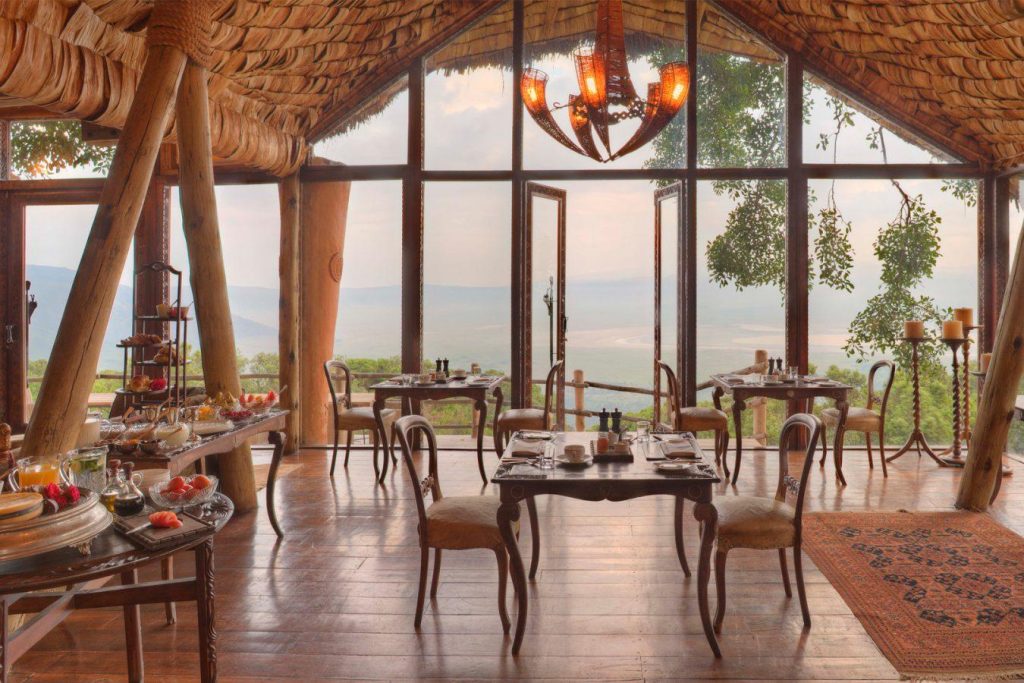
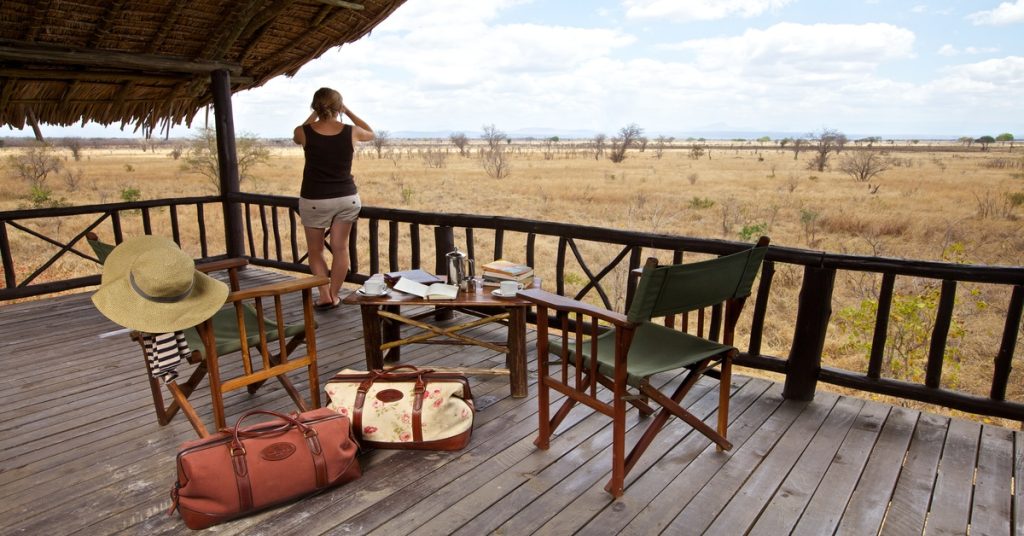
Luxury tented camps provide the classic “out of Africa” experience: spacious walk-in tents with proper beds, elegant furniture, and private verandas, with gourmet meals and premium service. There is no “best” option, only what’s best for your comfort level and wallet.
Beyond the standard safari clothing (neutral colors, layers), a migration safari demands a few specifics. Dust is intense, so bandanas or face coverings are useful. Bring high-quality binoculars for watching distant herds gather. A camera with a good zoom lens (200mm minimum) is essential, especially for capturing those iconic moments during your 4 Days Serengeti Migration Safari.
Most importantly, pack patience. Wildlife viewing, especially a specific event like a crossing, is not a guaranteed show. The ability to enjoy the anticipation, the landscape, and the other animals you’ll see is what makes a great safari traveler.
This is the most underestimated part of your safari. Your guide’s skill, knowledge, and ethics make or break your trip. A great guide doesn’t just find animals; they explain behavior, respect distance, and know how to position the vehicle for the best view without disturbing wildlife.
We ensure our guides are fairly paid, highly trained, and passionate about sharing their home. Their on-the-ground network is your best tool for finding the migration each day. This commitment to our team is a direct investment in the quality of your experience on your 4 Days Serengeti Migration Safari.
When comparing operators, look beyond the glossy pictures. Ask direct questions: Are park fees included? What is the exact accommodation name for each night? What is your guide-to-guest ratio? What is your policy if the migration is in a different zone during my dates?
A trustworthy company will answer transparently and provide a clear, written itinerary like the one above. They understand you’re investing in a once-in-a-lifetime moment and should act as your knowledgeable partner on the ground, not just a sales office.
Yes, it’s a solid introduction. With four full days, you have enough time to travel from Arusha into the Serengeti’s prime zones and have multiple full days to search for the herds. It balances experience with a typical vacation timeframe, and a 4 Days Serengeti Migration Safari is a balanced itinerary for those seeking to see dramatic wildlife moments.
In peak season (July-October) in the northern Serengeti, chances are good, but never 100% guaranteed. The herds cross when they decide. A good guide maximizes your odds by monitoring movement and being at known crossing points at the right times of day. For higher chances, consider a 4 Days Serengeti river crossing safari specifically planned for this spectacle.
A migration safari is timed and routed specifically to track the massive wildebeest and zebra herds. A regular safari focuses on general wildlife viewing across parks. Your 4-day migration safari will still see plenty of resident wildlife, but the main goal is the spectacle of the moving herds. If your interests are focused on the calving season, booking a 4 Days Ndutu calving safari ensures a front-row seat to the action in Ndutu and the southern plains.
Tipping is customary. A general guideline is $15-$25 per day for your guide and $10-$15 per day for the camp staff, per traveler, pooled. Always tip in cash (US dollars are fine), based on the quality of service you feel you received.
Yes, when with a professional guide. You stay in the vehicle at all times during game drives. The animals view the vehicle as a single, non-threatening entity. Your guide is trained in animal behavior and will never put you in a risky situation.
You will be in a pop-top 4×4 Land Cruiser or similar safari vehicle. The pop-top allows you to stand for unobstructed 360-degree viewing and photography. Private safaris often use newer vehicles, while group safaris may have a slightly older, but still perfectly functional, fleet.
Yes, but power sources vary. Most lodges and luxury camps have 24-hour electricity in rooms. Many tented camps and all campsites rely on generator power, usually run only in the evening and early morning. Bringing a power bank is always a smart backup.
Malaria is present in Tanzania. Consult a travel doctor well in advance for anti-malarial prophylaxis recommendations. Yellow Fever vaccination is required if traveling from a country with risk of YF transmission; a certificate is mandatory. Tetanus, Hepatitis A, and Typhoid are also commonly recommended.
A flexible itinerary and an experienced guide are your solutions. While we predict based on seasons, the herds move. Your guide will use real-time information from the ranger network to adjust your game drive routes each day to find the most impressive wildlife, migration or not.
Absolutely essential. It should cover medical evacuation (a critical need in remote areas), trip cancellation, lost luggage, and emergency medical expenses. Do not embark on a safari without comprehensive travel insurance from a reputable provider.
“`